昔日客家人多居於山區,若當造農作物盛產,便須順應天氣及地理環境及時處理,妥善保存以未雨綢繆。加上客家人熱情好客,每逢親友到訪總要「加餸、加雙筷子」,而菜脯煎蛋便是一道家常好菜。
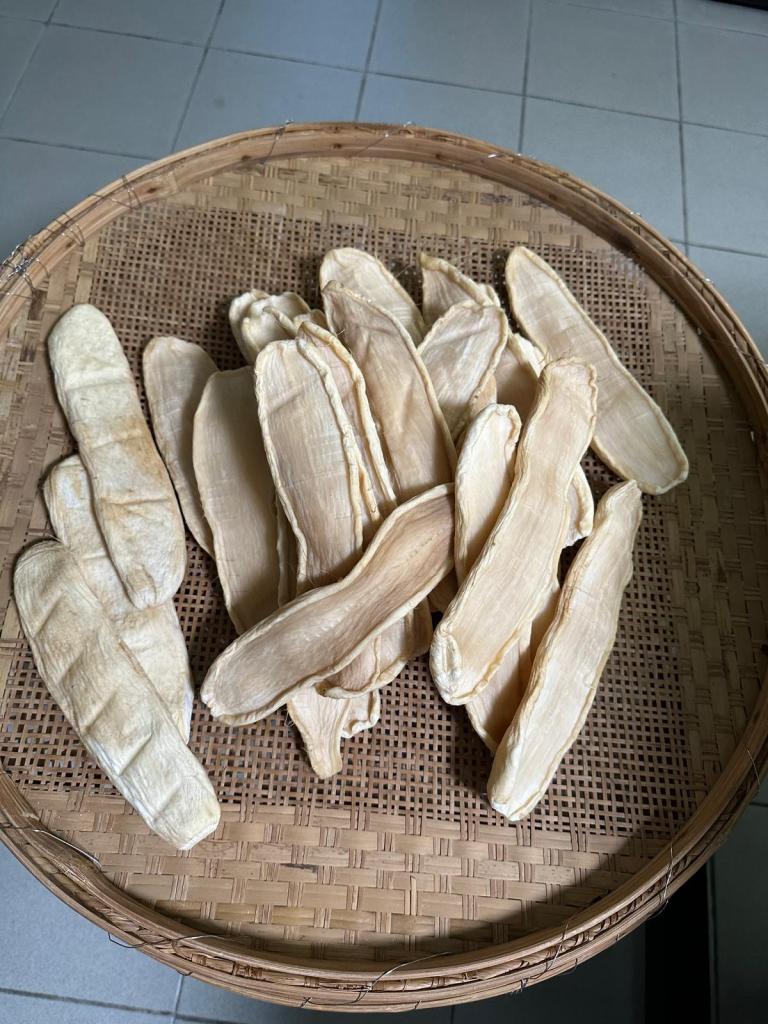
蘿蔔菜脯是最基本的一種。將蘿蔔切條,以鹽醃漬及曬乾儲存,既能延長新鮮食材的保質期,亦能轉化出獨特風味。及時加工是珍惜大自然恩物的表現;即使山區生活清苦,客家人仍秉持「窮則變,變則通」的智慧,不怨天尤人,懷著知足感恩的心勤奮幹活。
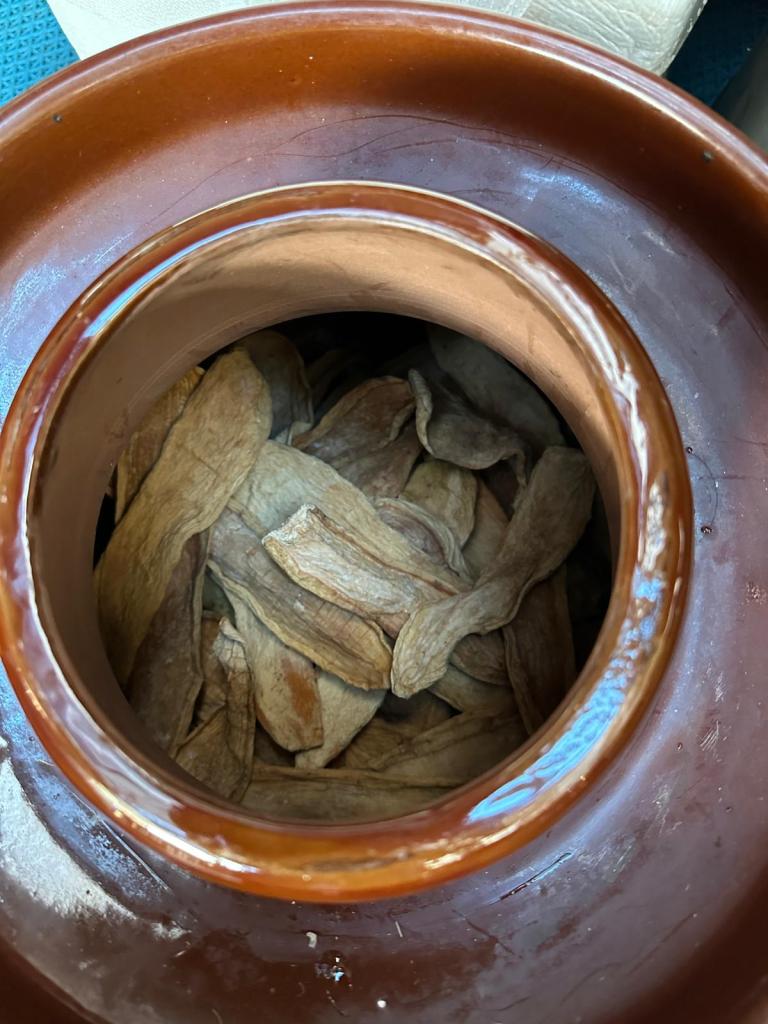
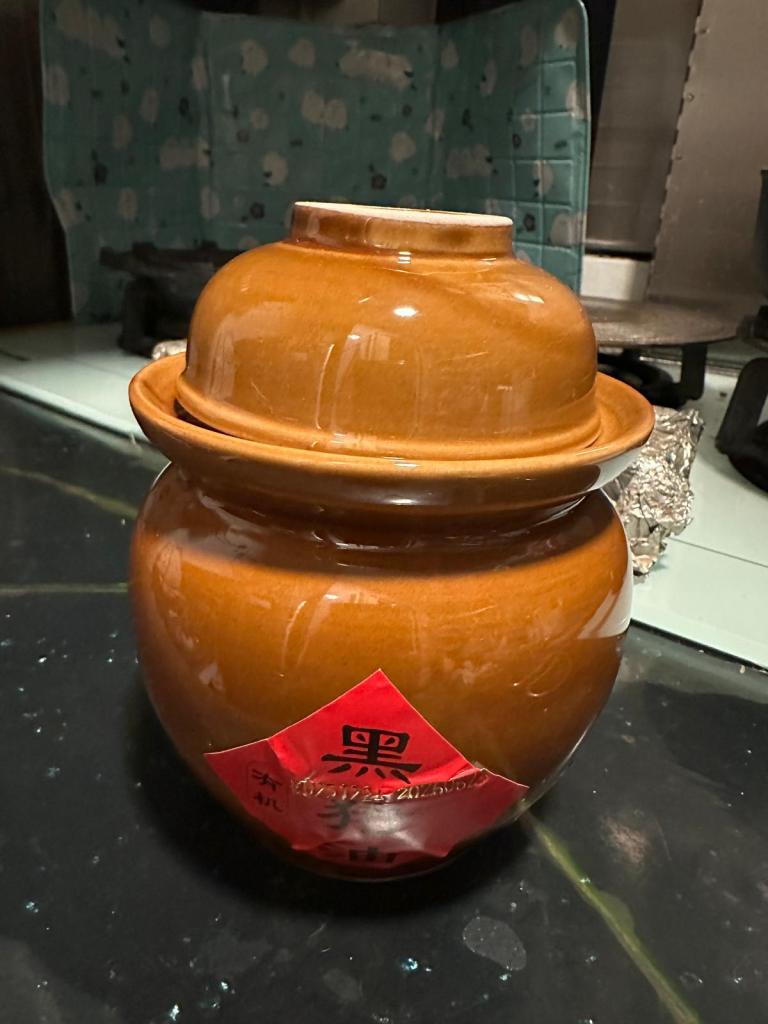
黑金菜脯以整條蘿蔔醃漬曬乾而成,製作需耗時一整星期,方可入甕儲存。每逢冬季蘿蔔盛產,便將整條蘿蔔用鹽醃漬並反覆曝曬;每至傍晚收回疊起,再以大石壓扁脫水。如此重複操作一星期後,最後才裝入陶甕或玻璃罐內密封保存。
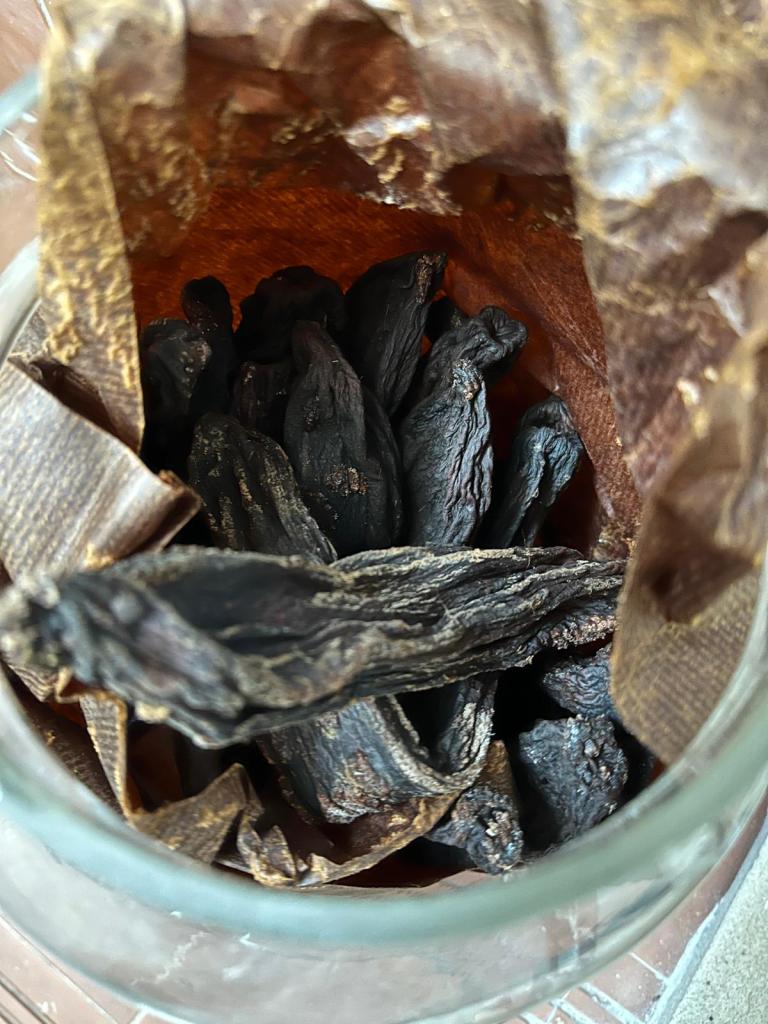
一般市面上見到的新鮮菜脯呈金黃色,醃製期僅約數個月;而整條蘿蔔在陶甕中陳化三年後,便會明顯變黑成為「老菜脯」。隨著時間推移,陳放八至十年以上的老菜脯經過天然醣化及發酵,會轉化為深黑色,表面滲油且具光澤;這般高檔的製法與精緻的成品,遂被稱為「黑金菜脯」。
隨著歲月累積陳化,原本帶點微苦的鹹味,會轉化為酣醇溫潤、帶酸微甜且隱含果香的滋味,入口回甘順喉。黑金菜脯亦具食療作用,每逢由秋入冬、天氣轉涼導致喉嚨乾涸痕癢或胃氣脹時,用黑金菜脯煮水或煲湯,實為食療養生一絕。
© 2026過客聊客家,版權所有。
Hakka Pickling Wisdom: From Preserved Radish to Aged “Black Gold” Radish
Traditionally, the Hakka lived in remote, mountainous regions. To prepare for leaner times, they had to process and preserve their abundant seasonal crops promptly, adapting to the local climate and terrain. Known for their hospitality, the Hakka always add an extra dish and a pair of chopsticks to the table whenever friends or relatives drop by, and a home-style preserved radish omelette is often that dish.
Preserved radish is the most fundamental variety of these stored foods. Fresh white radish is cut into strips, salted, and sun-dried, a process that both extends its life and imparts a unique, savory depth. Processing harvests promptly reflects a deep appreciation for nature’s bounty. Even amid the hardships of mountain life, the Hakka lived by the wisdom that “poverty prompts change, and change leads to solutions”, working diligently without complaint and embracing life with gratitude and contentment.
“Black Gold” preserved radish is made from fresh white radishes salted and sun-dried, requiring a full week of preparation before it can be sealed in clay jars for storage. During the winter radish harvest, fresh radishes are salted and repeatedly sun-dried by day. Every evening, they are gathered, stacked, and pressed flat under heavy stones to squeeze out moisture. After repeating this cycle for seven days, the radishes are finally packed into clay crocks or glass jars and sealed for preservation.
Fresh preserved radish commonly seen is golden-yellow, cured for only a few months. When radishes are aged in clay jars for three years, they darken noticeably into “aged radish”. Over eight to ten years or more, natural saccharification and fermentation transform them into a deep, glossy black with a rich sheen of natural oils. Because of this artisanal craftsmanship and refined result, it is known as “Black Gold” preserved radish.
As time goes on the initial salty, slightly bitter taste mellows into a rich, full-bodied warmth, subtly tangy and sweet with fruity undertones, leaving a smooth, lingering sweetness on the palate. “Black Gold” preserved radish also holds medicinal culinary value: when the weather turns cool from autumn into winter and causes a dry, itchy throat or stomach bloating, simmering it in water or soup is an unmatched restorative tonic.
© 2026 Dialogues on Hakka. All rights reserved.



Leave a Reply