客家族群是在先民多次遷徙的歷史進程中逐漸形成的。歷史記載中,客家人經歷了一次大規模遷徙,以及五次因動亂而被迫進行的避難。前者多屬在政策引導下的有計劃移動,後者則是面對危機時的被動求生。
從宏觀層面觀察,這些遷徙與避難大多與王朝更替、農民起義及外族入侵中原等政治動盪密切相關;從微觀層面分析,則涉及戰亂、飢荒、瘟疫等直接威脅生存的因素。
秦始皇統一中國後,曾派遣軍隊駐守南方,並有計劃地組織大批人口南遷,在嶺南地區建立家庭、開墾土地,逐步形成早期社會結構。此後,客家先民又在歷史動盪中經歷了五次重要的避難遷徙,分別為:
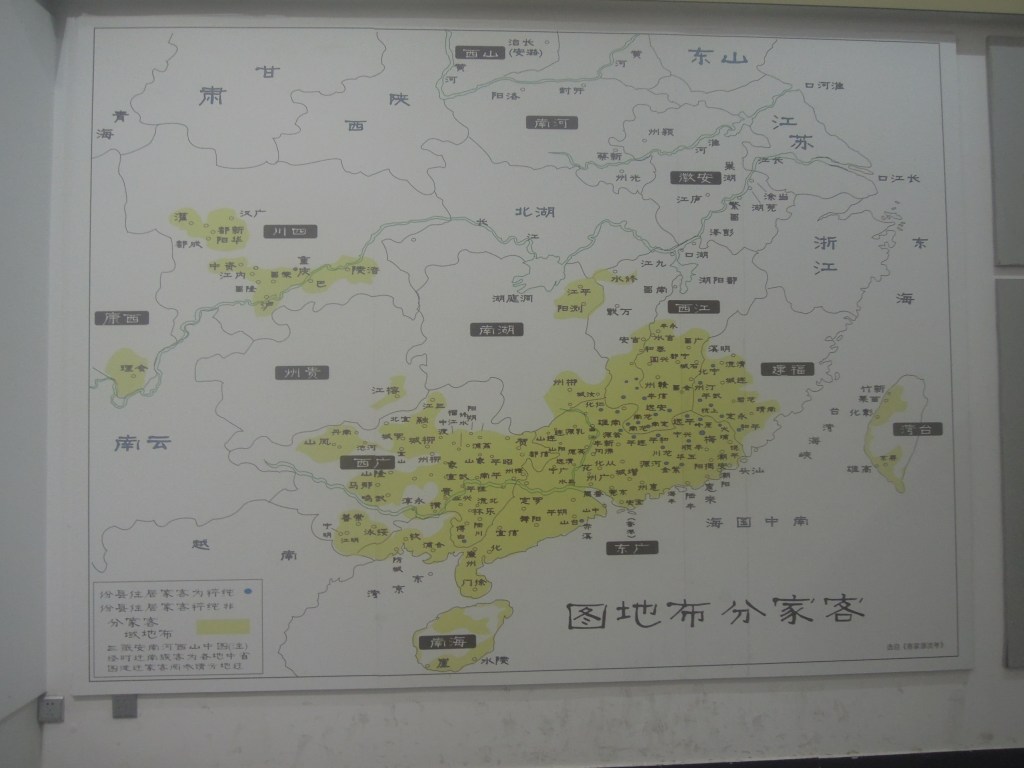
第一次︰東晉時期,五胡亂華,中原居民逃入閩、粵、贛邊區。
第二次︰唐末,黃巢起義及安史之亂,南逃至閩、粵、贛地區。
第三次︰南宋及宋末,金人入侵,中原居民再度避難至贛、閩、粵等地。
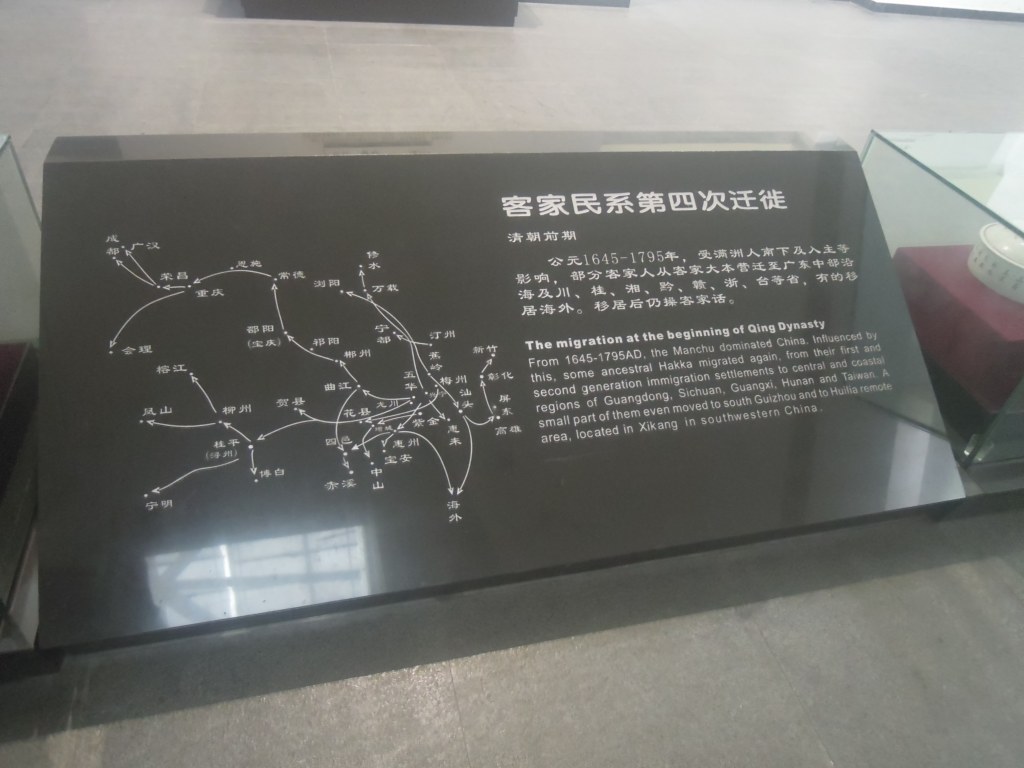
第四次︰明末清初,贛南、閩東、粵北人口繁衍,山多地少,遂向川、湘及粵中、粵西遷徙,形成大規模西進。當時四川因戰亂、瘟疫及自然災害人口銳減,朝廷遂推行「湖廣填四川」政策。
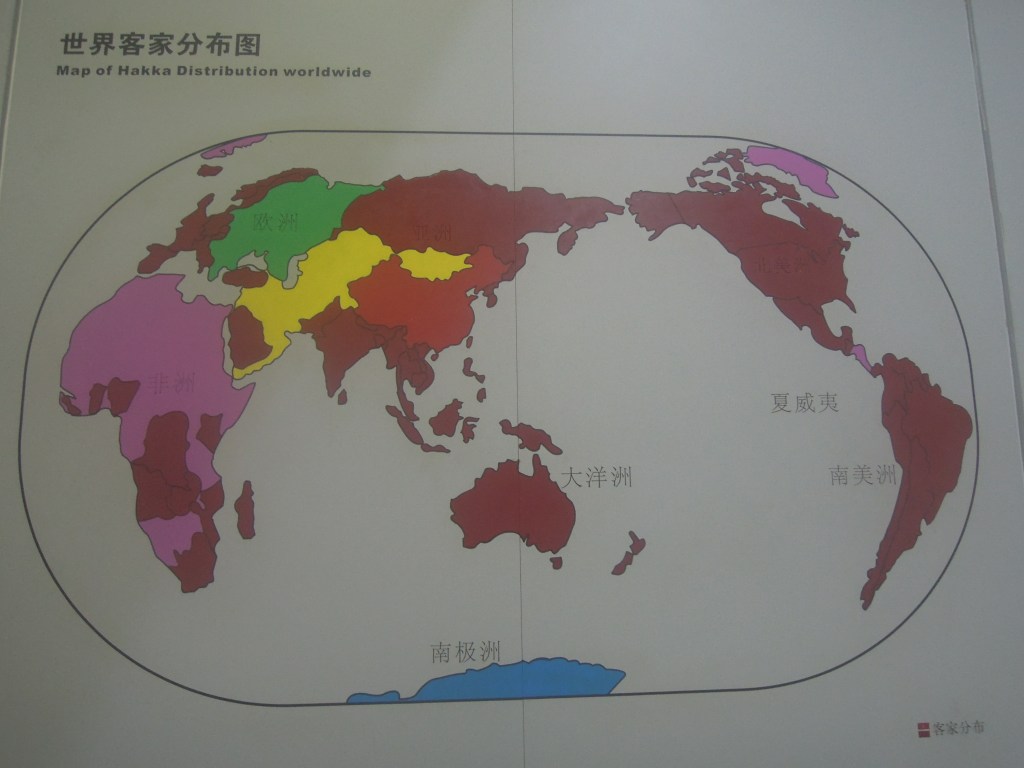
第五次︰清咸豐、同治年間,太平天國戰亂,客家人逃往南亞、馬來西亞、美國、巴拿馬、巴西等地。
客家人自中原輾轉南遷,以語言作為最核心的身份標誌,而非以地域或地名自稱。他們自視為「客人」,在異地落腳、開墾、扎根,最終將他鄉化為故鄉。客語中「我」常以「涯」(註︰部首為「人」字旁)自稱,語意中帶著艱辛與堅忍;甚至以「捱世界」自嘲,呈現出客家人面對困境時不屈不撓、勤勞踏實的生命態度。
延伸閱讀︰
蕭國健,《崇文重教:香港新界客家歷史與文化》(三聯書店(香港)有限公司,2024)
© 2026過客聊客家,版權所有。


Treasure #06 Brief History of Hakka Migration
The Hakka identity gradually emerged throughout historical times marked by multiple waves of migration undertaken by their ancestors. The historical records show that they experienced one large-scale and organized migration, and five subsequent waves of migration caused by social upheaval. The former was largely a planned movement guided by state policies, whereas the latter was passive act of survival in the face of crisis.
From the marco perspective, such migration was closely tied to political reasons such as dynastic transition, peasant uprisings and invasion of the “Central” by external groups. From the micro perspective, they were driven by immediate threats to survival, including warfare, famine and epidemics.
After Emperor Qin unified China, he stationed troops in the southern region and organized large-scale, planned migration to the south. The settlers established families, cultivated land, and gradually formed the early social structure. In the centuries that followed, the ancestor of the Hakka experienced five major waves of migration, namely:
1. During the Eastern Jin period, when the Five Barbarians overran northern China, residents of the “Central Plains” fled southward into the border regions of Fujian, Guangdong, and Jiangxi.
2. In the late Tang dynasty, the Huang Chao Rebellion and the earlier An Lushan Rebellion triggered another major southward flight into the Fujian–Guangdong–Jiangxi region.
3. During the Southern Song and the end of the Northern Song, the Jurchen (Jin) invasions forced “Central Plains” residents to seek refuge once again in Jiangxi, Fujian, Guangdong, and surrounding areas.
4. From the late Ming to the early Qing, population growth in southern Jiangxi, eastern Fujian, and northern Guangdong strained the limited arable land in the mountainous regions. This led to large-scale westward migration into Sichuan, Hunan, and central and western Guangdong. At the time, Sichuan’s population had drastically declined due to warfare, epidemics, and natural disasters, prompting the Qing government to implement the “Huguang Fills Sichuan” resettlement policy.
5. During the Xianfeng and Tongzhi reigns of the Qing dynasty, the Taiping Rebellion devastated large parts of southern China. Many Hakka people fled overseas to South Asia, Malaysia, the United States, Panama, Brazil, and other regions.
Hakka migrated southward from the “Central Plain” over generations, identifying themselves primarily through their language rather than by geographical locations. Seeing themselves as “guests” in the places where they settled, they cultivated the land, built new communities, and gradually transformed unfamiliar territory into their new homeland. In Hakka language, the pronoun “I” is often expressed as “ngai”, a term that carries connotations of hardship and resilience. Hakka even use the phrase “ngai sai-kai” (to endure the world) in a self-deprecating way, revealing a worldview shaped by perseverance, diligence and an unyielding spirit in the face of adversity.
© 2026 Dialogues on Hakka. All rights reserved.

 hkhakkastory.com
Leave a comment