香港客家族群對苎蔴葉(俗稱粗葉)情有獨鍾。這與當時的地理環境有關。香港新界的平坦土地早已被他人開墾耕種,只剩下一些山區崎嶇的石地與雜樹叢生的荒地。祖先便因地制宜,在當地種植苎麻,並熟悉其生長特性。春季萬物萌發之時,苎麻葉背的白色絨毛纖維最為豐富;待季節過後,葉片纖維變得單薄,食用價值也隨之降低。
每逢清明時節,便採摘「天青地白」的苎蔴葉,混入糯米粉製成粿皮,內餡以爆谷椰絲與黃冰糖、紅糖調和,蒸成茶粿。其質地清香Q彈,色澤深黑,形似牛糞,卻別具風味。
苎蔴樹用途廣泛︰春季嫩葉可製粗葉粄,清香可口;根部與頭部入藥,能治婦女崩漏並安胎;樹皮纖維則可抽絲、結繩、紡紗織布,製成天然衣料。此為環保原材,工序繁複,堪稱自然恩物。
順帶一提「湖廣填四川」時期︰廣粵客家人亦將苎蔴帶入四川,善用其樹皮製作生活用品,如紡布、粗繩、鞋底,甚至於白事披蔴、端午包粽、日常捆綁等,皆見苎蔴之影。
1. 將黃冰糖與紅糖煮溶;
2. 加入爆谷與椰絲,拌炒成餡料;
3. 將紅糖、黃冰糖、粗葉與熱水攪拌成漿;
4. 搓揉糯米粉,逐步加入食油與粗葉漿;
5. 蒸糯米粉團約10分鐘;
6. 製作粿皮;
7. 包入餡料;
8. 再蒸約20分鐘,即成。
© 2026過客聊客家,版權所有。
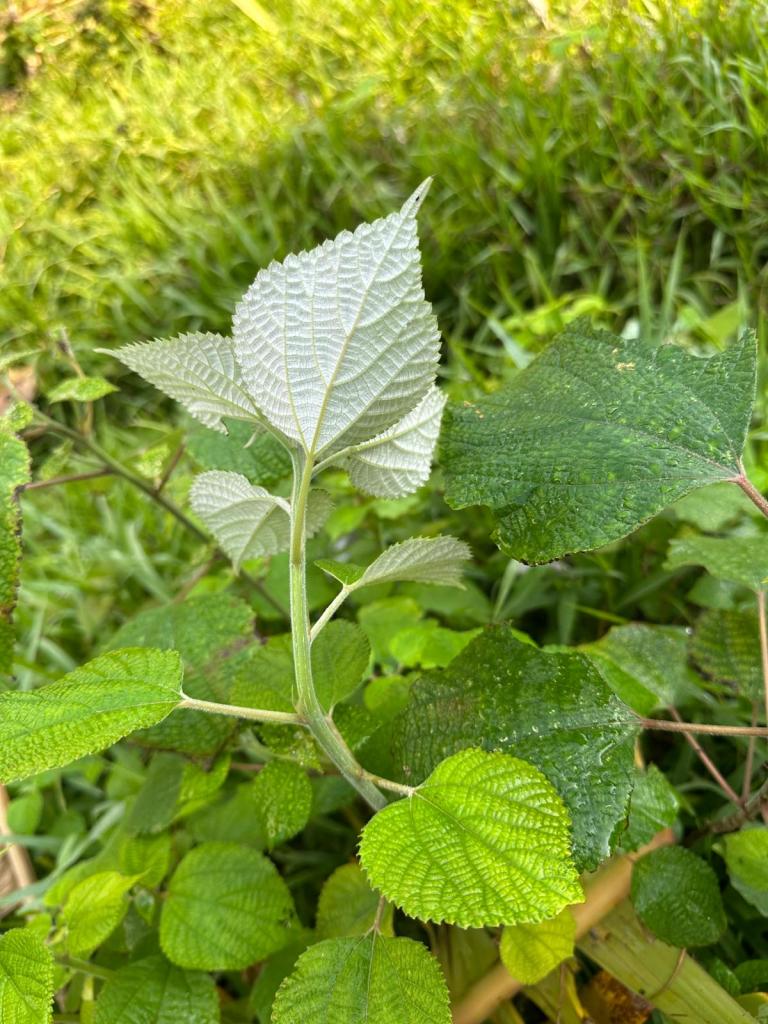
苎蔴葉。Coarse Leaves
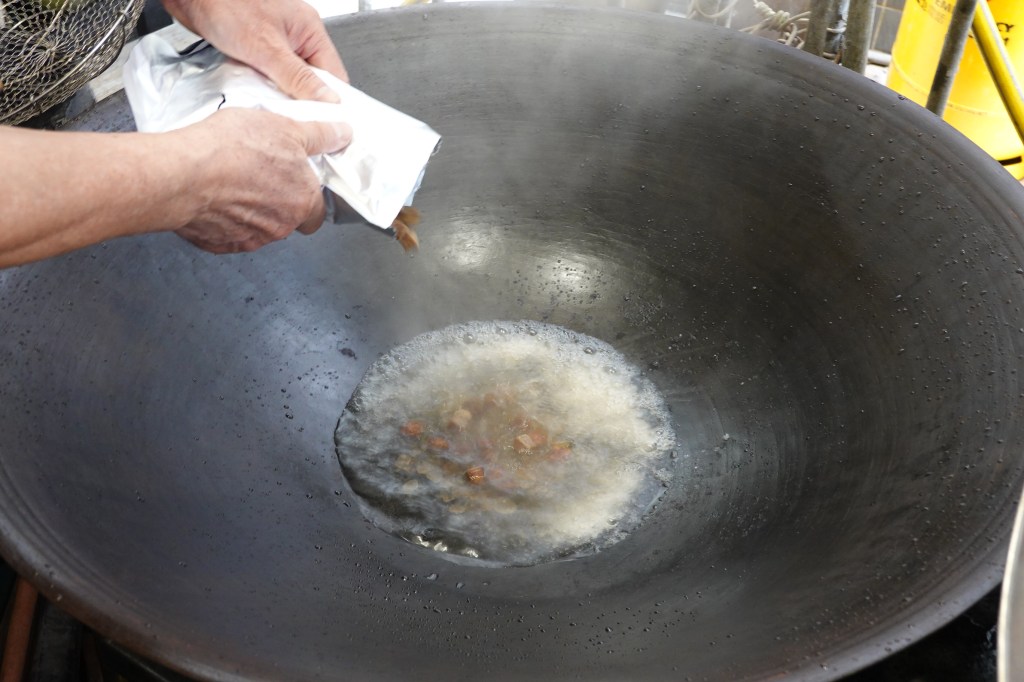
煮溶黃冰糖與紅糖。Melt yellow rock sugar and brown sugar.
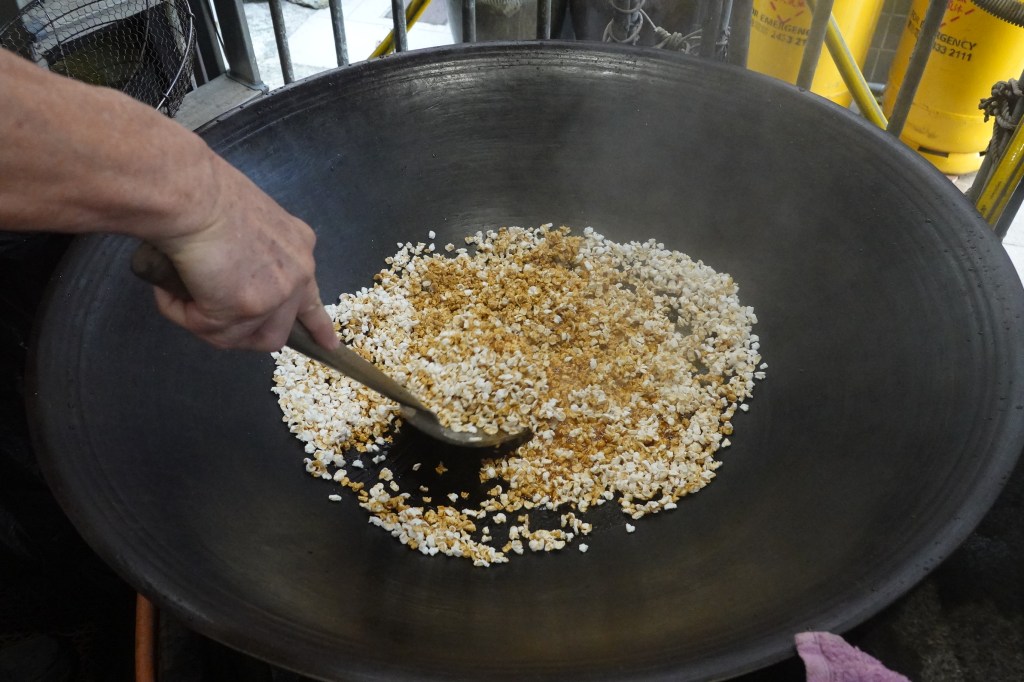
拌炒爆谷、椰絲成餡料 Add popped rice and shredded coconut, stir-fry into filling.
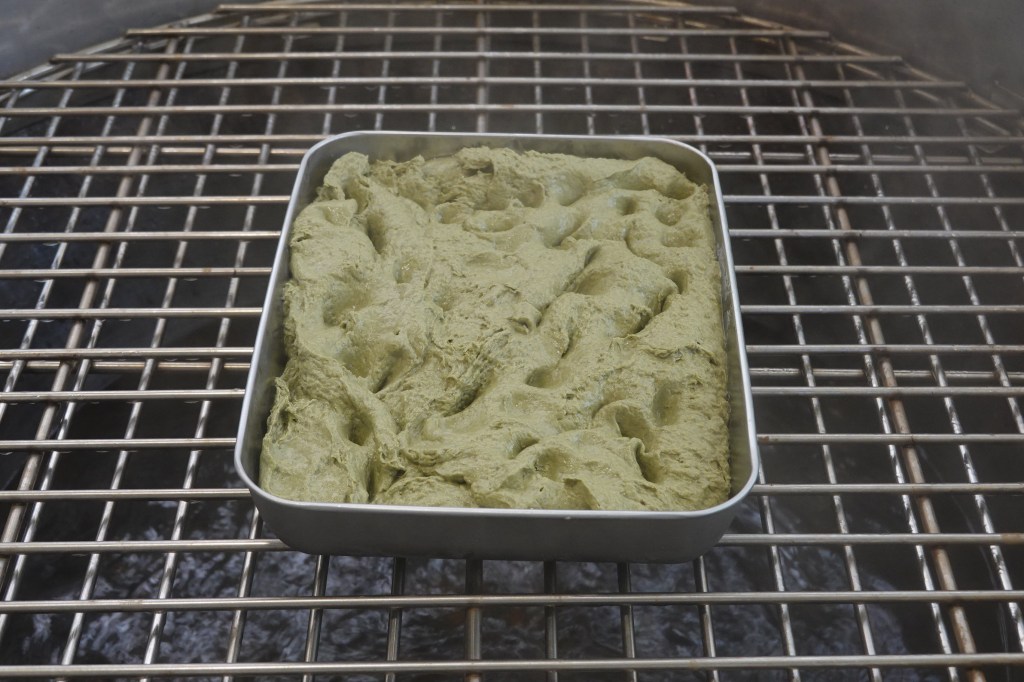
蒸糯米粉團 Steam the rice dough for about 10 minutes.
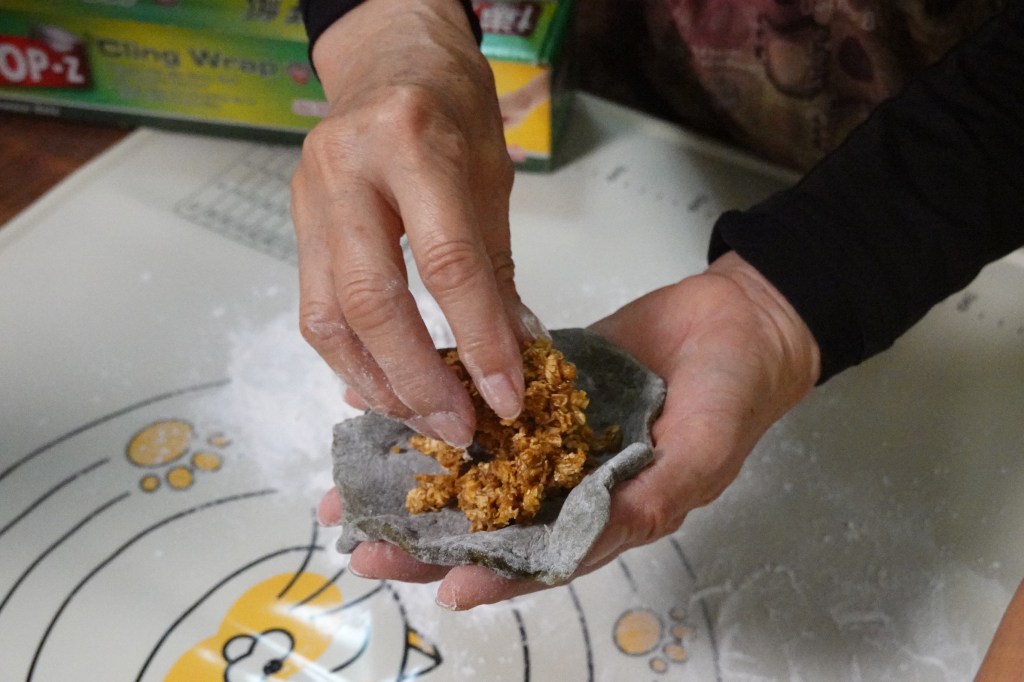
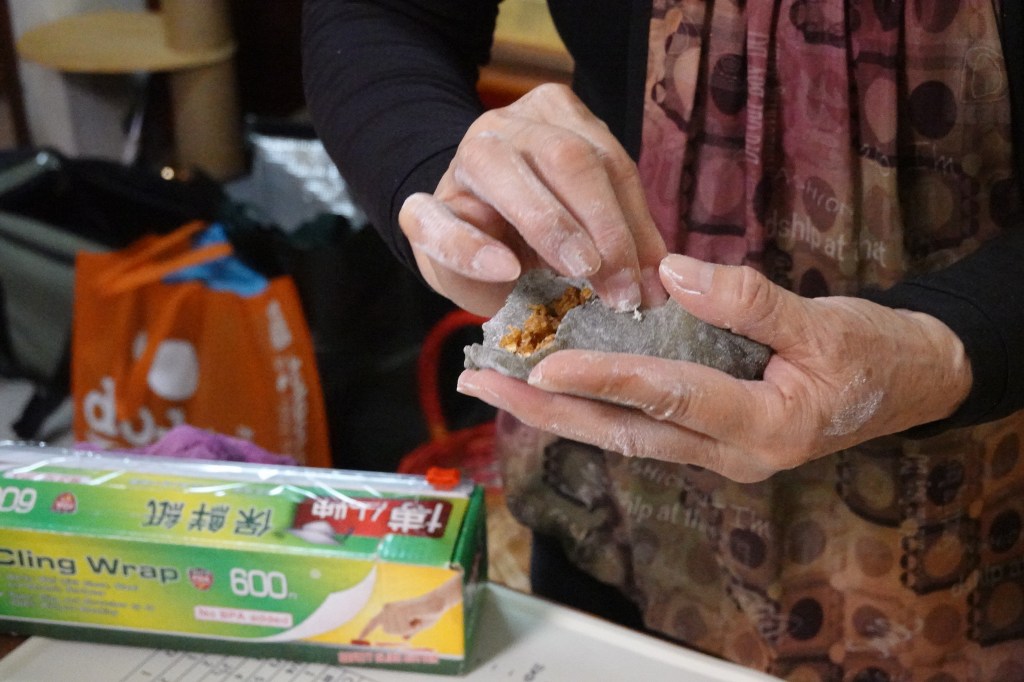
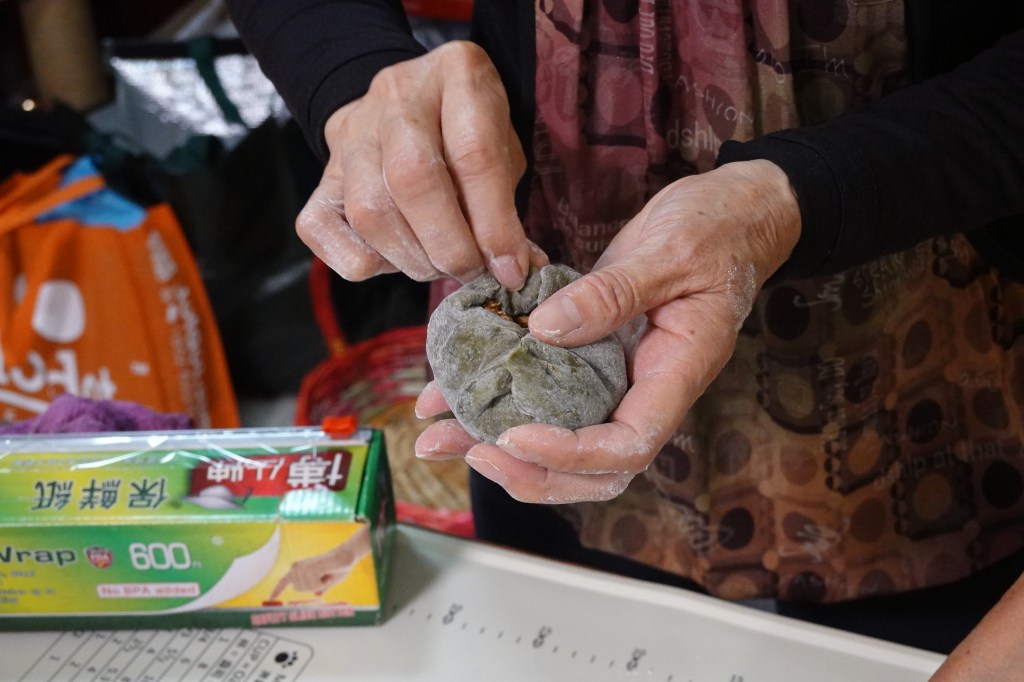
製成粿皮後,包入餡料。Shape into cake skins.
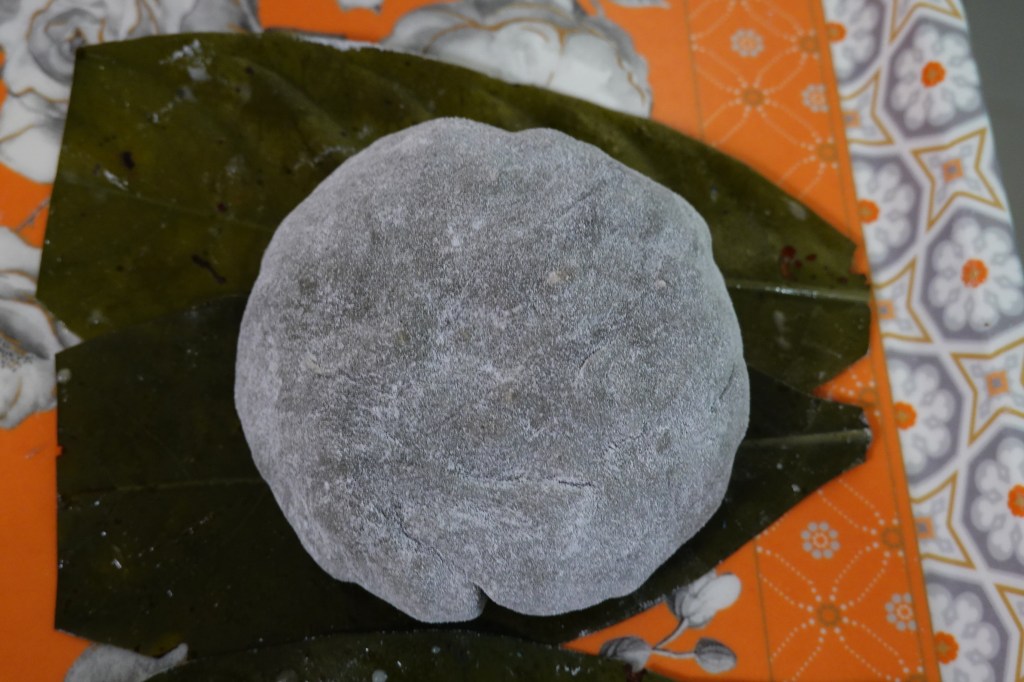
準備蒸製。Ready for steaming.
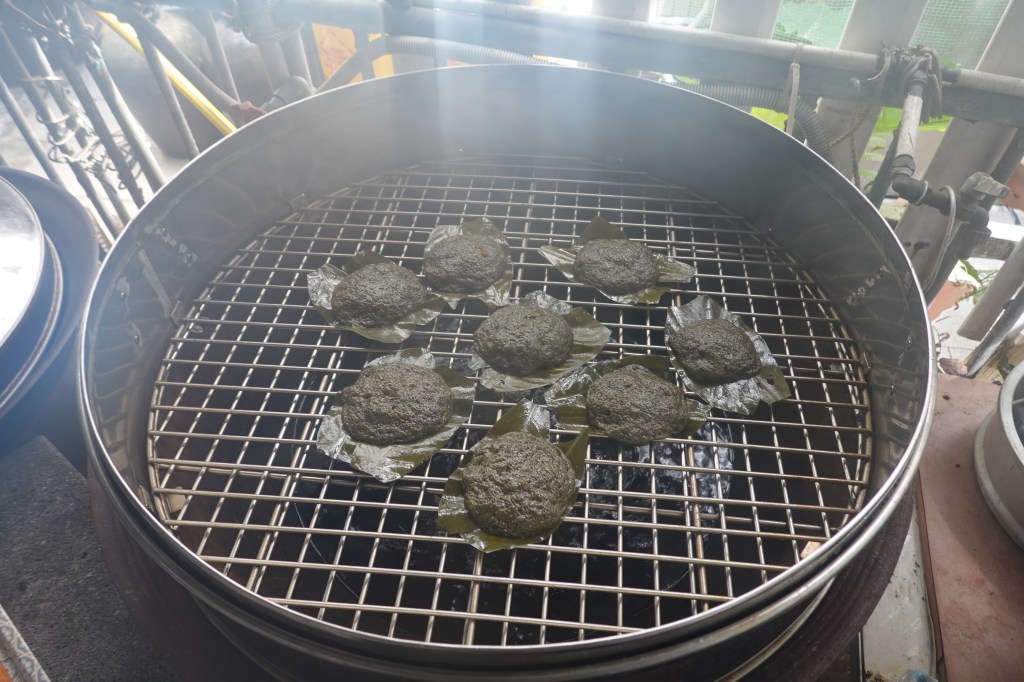
完成蒸製的粗葉粄。Steam for another 20 minutes, and it’s ready.
English Translation
The Hakka community in Hong Kong has a special fondness for coarse leaves. This preference is closely tied to the local geography. In the New Territories, the flat land had long been cultivated by others, leaving only rugged stony hillsides and overgrown wastelands. Adapting to the environment, the ancestors planted coarse leaves and became familiar with its growth patterns. In spring, when all things sprout, the underside of the coarse leaf is covered with rich white fibre; later in the season, the fibre thin out and its culinary value diminishes.
During the Ching Ming Festival, people would harvest the “sky-blue, earth-white” coarse leaves, mix them into glutinous rice flour to form the dough skin, and fill it with a mixture of popped rice, shredded coconut, yellow rock sugar, and brown sugar. Steamed into dumplings, the result is fragrant, chewy, and dark in color—resembling cow dung in appearance, yet uniquely flavorful.
Ramie trees have many uses: tender spring leaves can be made into coarse-leaf dumplings, fresh and delicious; the roots and tips are used in medicine to treat gynecological bleeding and to stabilize pregnancy; the bark fibre can be drawn into threads, twisted into ropes, spun into yarn, and woven into cloth, producing natural textiles. As an eco-friendly raw material, though labor-intensive to process, coarse leave is truly a gift of nature.
It is worth mentioning that during the migration, Hakka people from Guangdong also brought coarse leaves into Sichuan. They skillfully used its bark to make everyday items such as cloth, coarse ropes, shoe soles, and even mourning garments, Dragon Boat Festival rice dumpling wrappings, and daily bindings—all bearing traces of coarse leaves.
Step:
1. Melt yellow rock sugar and brown sugar.
2. Add popped rice and shredded coconut, stir-fry into filling.
3. Mix brown sugar, yellow rock sugar, ramie leaves, and hot water into a slurry.
4. Knead glutinous rice flour, gradually adding oil and ramie slurry.
5. Steam the rice dough for about 10 minutes.
6. Shape into cake skins.
7. Wrap with filling.
8. Steam for another 20 minutes, and it’s ready.
© 2026 Dialogues on Hakka. All rights reserved.

 hkhakkastory.com
Leave a comment