古時生活不易,農人辛勤耕作卻未必有收成。春耕、夏種、秋收、冬藏,僅能勉強維持生計,因此更懂得感恩,珍惜食物,物盡其用,形成生態循環,展現早期的環保智慧。平日多是清茶淡飯,只有過節大日子才有肉食。對客家人而言,新年是最重要的節日;而在節氣之中,冬至更是關鍵,因為冬天要收藏來年的糧食與穀種。
所謂「冬大過年」,冬至是一年中日照最短、夜晚最長的一天。新年則是展現冬藏一年甚至多年辛勞的收穫之時。每逢大日子,人們會屠宰豬隻以供特別享用;然而除夕劏豬並非每家都能負擔,甚至略顯奢侈。祖輩因此想出辦法,解決過年難關與經濟困境:幾家人輪流養一頭豬,待至新年合作屠宰。今年由甲家供養,眾家分享;翌年由乙家接手,如此輪值合作,稱為「輪仔」,意指輪流劏豬仔過年。
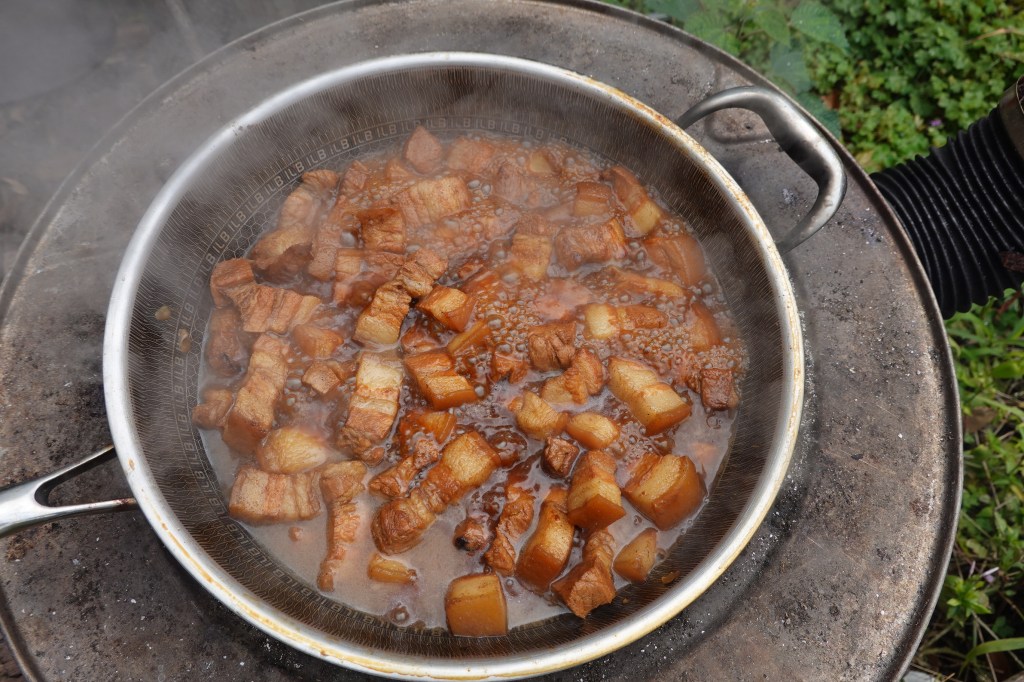
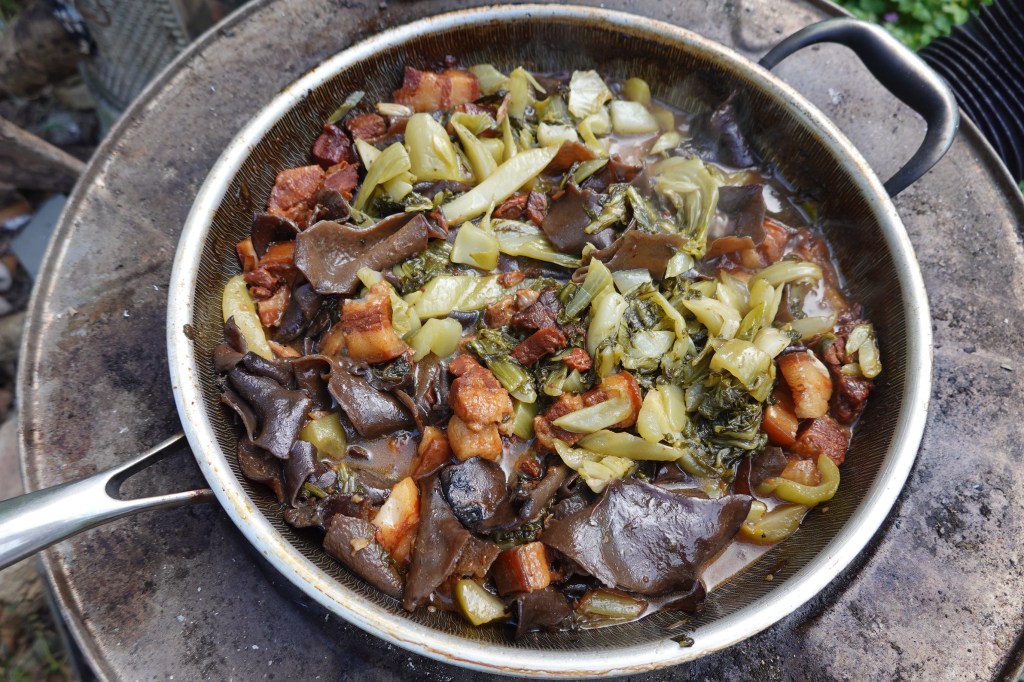
祖輩善於物盡其用,整頭豬(包括內臟)皆能入饌,以鹽醃製各類食材,巧手烹調農家菜,如炆豬肉、梅菜扣肉、芋頭扣肉等。筆者近年亦承襲此智慧,製作咸菜木耳炆豬肉與鄰居分享。此菜式以三種材料為主:五花腩、自家醃製的大芥菜,以及山上枯樹所生的白背木耳。經香料與調味烹調後,五花腩肥瘦相間、口感適中;芥菜咸酸爽口,既增食欲又解膩;木耳則有散瘀通血脂之效。這道菜不僅美味,更蘊含祖輩的生活智慧與健康理念。
製作方法:
1. 準備五花腩、芥菜及木耳;
2. 將五花腩放入滾水中汆燙;
3. 加入香料與調味料,炆煮豬肉;
4. 同時烹調木耳與咸菜;
5. 五花腩煮至軟糯入味,略帶汁水而不乾身,再與木耳、咸菜拌勻即可。
© 2026過客聊客家,版權所有。
English Translation
Hakka Wisdom of Life: Pork Belly with Preserved Vegetable
Life in the old days was not easy. Farmers worked hard in the fields, yet harvest was never guaranteed. The cycle of spring plowing, summer planting, autumn harvesting and winter storing only barely sustained livelihood. Such hardship fostered gratitude and respect for food, ensuring to create an ecological cycle that reflected wisdom in environmental sustainability. Daily meals were simple while meat reserved for important festive occasions. For the Hakka, the New Year was the most significant celebration; among the solar terms, Winter Solstice was especially crucial, as it signified the time to store grain and seeds for the coming year.
As the saying goes, “Winter Solstice outweighs the New Year”. The Winter Solstice marks the shortest day and longest night of the year. The New Year, in turn, is to showcase the fruits of the year – or even years – of hard work and storage. On such important occasion, people would slaughter pigs for special feast. Yet not every household could afford to slaughter a pig on New Year’s Eve; it was often considered a luxury. To overcome this challenge and ease economic hardship, the ancestor thought of a solution: several families would take turn raising a pig; then jointly slaughter it at New Year. One year, Family A would raise the pig and everyone shared; the next year Family B would take over, and so on. This is known as “rotation piglet”, meaning to take turn to slaughter a pig for the New Year.
The ancestor was skilled at making full use of the entire pig, including its innards, could be turned into dishes. Ingredients were preserved with salt, and rustic farm-style dishes were prepared with ingenuity – such as braised pork, pork belly with preserved mustard green, and taro pork belly. In recent years, I also have inherited this wisdom, preparing braised pork with preserved vegetables to share with my neighbour. This dish relies on three main ingredients: pork belly, preserved vegetables and fungus. Once cooked with seasonings, the pork belly balances fat and lean for a pleasing texture; the preserved vegetables are salty, tangy and refreshing, stimulating the appetite while the fungus are believed to help lower blood pressure. More than just delicious, this dish embodies the ancestor’s wisdom of life and their philosophy of health.
Steps:
1. Prepare the pork belly, preserved vegetables, and fungus.
2. Blanch the pork belly in boiling water.
3. Add seasonings, then braise the pork.
4. Cook the fungus and preserved vegetables separately.
5. When the pork belly is tender, moist but not dry, then mixed with fungus and preserved vegetables, and done.
© 2026 Dialogues on Hakka. All rights reserved.

 hkhakkastory.com
Leave a comment