古時婚嫁多非自主,父母之命、媒妁之言,往往成就一樁盲婚啞嫁。命運如何,全憑一線牽引;幸福幾許,唯有天曉得。當時「嫁女」幾近於「賣女」,女子一旦出嫁,便鮮有機會返娘家探望父母。置身今日再回望,難以想像昔日外嫁女唯有在農曆新年,方能名正言順地回娘家探親留宿,客語謂「拿外家」,多在初三、初四返娘家,住上兩三天,猶如今日享受工作年假一般。依習俗,返娘家必須攜帶伴手禮。早年未有糖果餅乾,女兒們便肩挑籮蒚,盛載農作物,其中最具代表性的兩樣伴手禮便是圓籠茶粿及豬肉砵。
豬肉砵的材料以五花腩或半肥瘦肉為主,佐以鹽、豆豉、果皮、糖、麵豉醬等配料,經反覆蒸製入味,口感軟糯。然而,它的意義遠不止於美食。豬肉砵象徵外嫁女在異鄉的生活︰人地生疏、環境如何、能否適應、日子是否艱苦、人際關係是否融洽—這些都難以一言道盡,卻是父母心中牽掛。當女兒帶着載有豬肉砵的籮蒚回娘家,便是向父母長輩傳遞訊息︰生活安穩,有魚有肉,日子過得不錯,請放心,不必憂心。這是一份知足勤奮、樂觀面對生活的心意。
自此故事流傳為佳話。往後村中若有嬰兒誕生,村民問起是男是女,便以一對代名詞作答:「慈菇椗,豬肉砵」,成為地方文化的獨特詞彙。
材料︰五花腩、鹽、豆豉、果皮、糖、麵豉醬
製作
1. 將五花腩或半肥瘦肉𠝹件不切斷,以防收縮滲油。放入滾水中汆燙。
2. 瀝乾水分,加入豆豉及其他配料調味,拌勻。
3. 將調味好的豬肉放入砵仔,置於蒸籠中蒸至熟透。
4. 隔日再蒸一次,甚至多次反覆蒸煮,使味道充分滲入,口感更為軟糯。
© 2026過客聊客家,版權所有。
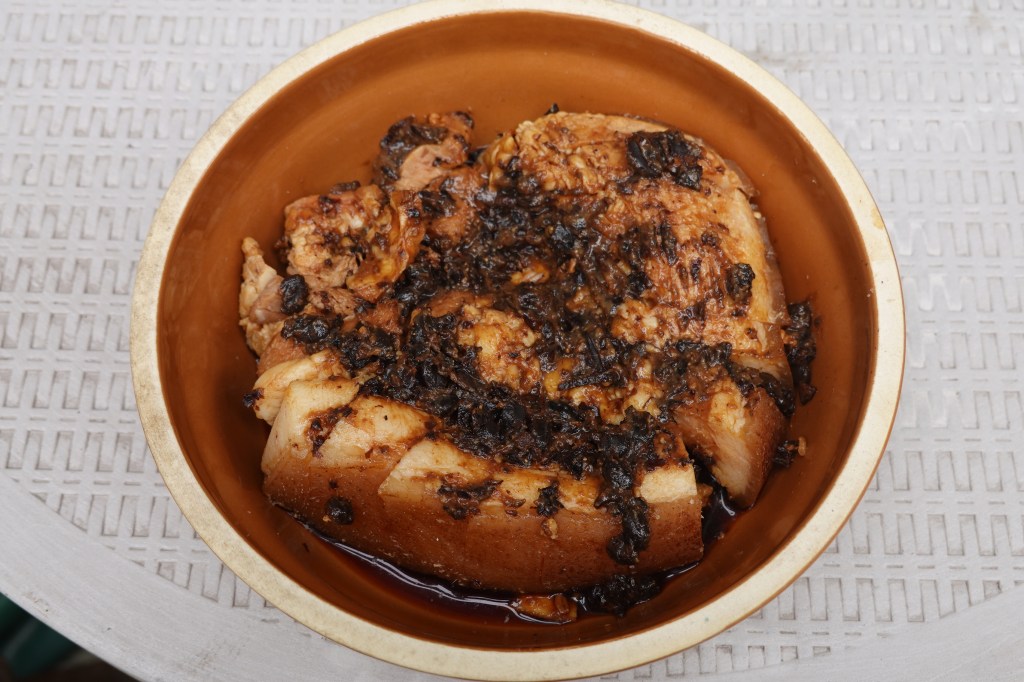
A Hakka Daughter’s Affection: The Pork Bowl
In ancient times, marriage was rarely a matter of personal choice. It was often arranged by parental command and the matchmakers, resulting in “blind marriage”. How fate would unfold depended entirely on a single thread of destiny; how much happiness awaited was known only to heaven. Back then, “marrying off daughter” was nearly equivalent to “selling a daughter”. Once a woman was married, she seldom had the chance to return to her natal home to visit her parents.
Looking back from today, it is hard to imagine that in the past, married daughters could only return home during Lunar New Year. This Hakka custom was known as “nan ngai ga” (going back to the natal home), usually on the third or fourth day of the lunar calendar. They would stay for two or three days, much like taking annual leave from work nowadays. According to the custom, a daughter had to bring gift while returning home. In earlier times, daughters carried bamboo basket filled with farm produce. The Round Steamed Sticky Rice Dumpling and pork bowl are the most representative gifts.
The main ingredient of the pork bowl is pork belly or moderately fatty-lean pork, complemented with salt, fermented black beans, dried tangerine peel, sugar, soybean paste, and other seasonings. It is repeatedly steamed until the flavors permeate and the texture becomes tender and glutinous. Yet its meaning goes far beyond food. The pork bowl symbolizes the life of a married daughter living away from home: the strangeness of a new place, the challenges of adapting, whether the days are hard, whether relationships are harmonious—these are difficult to express in words, but they weigh heavily on her parents’ hearts. When a daughter carried a bamboo basket containing a pork bowl back to her natal home, it was a message to her parents and elders: life is stable, there is fish and meat on the table, things are going well, so please be reassured and do not worry. It conveyed a spirit of contentment, diligence, and optimism in facing life.
From then on, the story was passed down as a tale. In later years, whenever a baby was born in the village, villagers ask whether a boy or a girl would be answered with a pair of symbolic expression: “arrowhead, pork bowl”. This has become an unique idiomatic term with local culture.
Ingredients: pork belly, salt, fermented black beans, dried tangerine peel, sugar, soybean paste
Procedure:
1. Cut the pork belly or medium-fat pork into pieces without separating them, so the meat retains its fat. Place into boiling water to blanch.
2. Drain well, then season with fermented black beans and other ingredients, mixing thoroughly.
3. Place the seasoned pork into a clay bowl and steam in a bamboo steamer until fully cooked.
4. On the following day, steam it again—sometimes repeatedly—so that the flavors permeate deeply and the texture becomes even more tender.
© 2026 Dialogues on Hakka. All rights reserved.

 hkhakkastory.com
Leave a comment