早前請大家來猜猜蒸籠和這篇帖文的關係,答案終於來啦!
茶粿是客家米食的重要代表,其精髓在於米、蔗糖及竹葉三者的巧妙交融。這份搭配既決定了佐茶點心的完美度,也成為衡量其品質的關鍵。圓籠茶粿,既是味蕾的起點,更象徵客家米食文化的起始與傳承。
源起
圓籠茶粿,是客家族群在農曆新年的傳統節慶食品。其外形以竹籮盛載,宛如一座微型客家圓龍土樓或圍龍屋,象徵著客家族群記憶與鄉愁。客家人離開祖居地,背井離鄉,以這款茶粿寄託對故鄉土樓的思念,飲水思源。其所用蔗糖純度高、香氣濃郁,更添年節的甜美氛圍。
客家族群歷經一次遷徙及五次逃難,茶粿曾是遷徙途中重要的糧食,象徵大地的恩賜與生命的延續。圓籠茶粿不僅承載歷史記憶,也寄望後代珍惜當下的安穩生活,心懷感恩。此外,圓籠茶粿亦代表農耕社會感謝豐收,祈願風調雨順。它是辛勤勞作後的成果,富有人情味,象徵分享與團圓。
製作回憶
- 傳統圓籠茶粿味道偏甜,糯米粉及糖的比例是一比一。過往物資匱乏,只有過年過節才有機會吃糖。
- 早年蒸茶粿以柴草為燃料,以柴火灶燒火,需細心掌握火候及水量,整個蒸製過程長達一日一夜;如今改用石油氣蒸茶粿,好處是溫度較為恆定,但蒸的時間比柴火要長,一般柴火蒸需20個小時,依然講究水份與火力的掌控。
- 筆者年青時協助父母製作圓籠茶粿;自1990年代起,開始獨立製作圓籠茶粿,初期尺寸相對較小,使用約兩斗糯米為原料;至2010年代,製作規模逐漸擴大,所用糯米量增至約三斗。
製作技藝
材料
- 黑蔗糖,30斤
- 糯米粉,30斤
- 水,約15斤
炊煮器具
- 大鑊
- 蒸鍋
- 石油氣
- 篩
- 竹籮(人手編織)
- 竹葉
- 竹片
- 厚雞皮紙
- 牛油紙
- 芒萁或針線
製作步驟
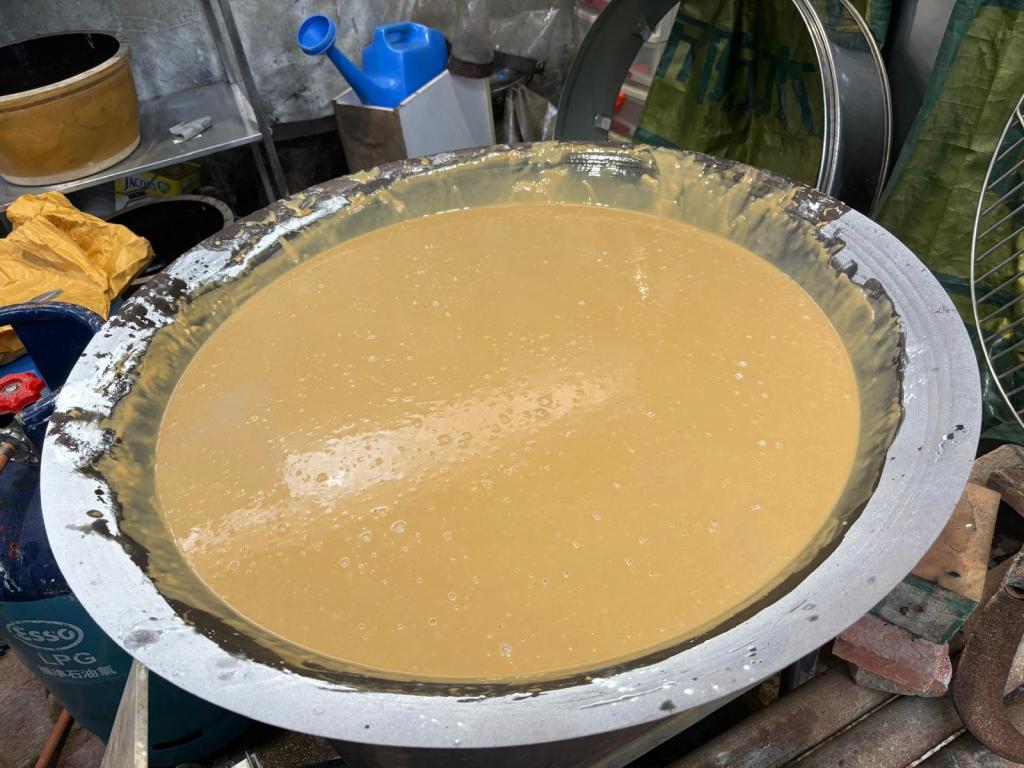
- 先將水煮至沸騰,加入30斤黑蔗糖,以溫火慢煮至完全溶化,糖水呈棕色。
- 煮好糖水後,以篩過濾,去除沙石與其他雜質。
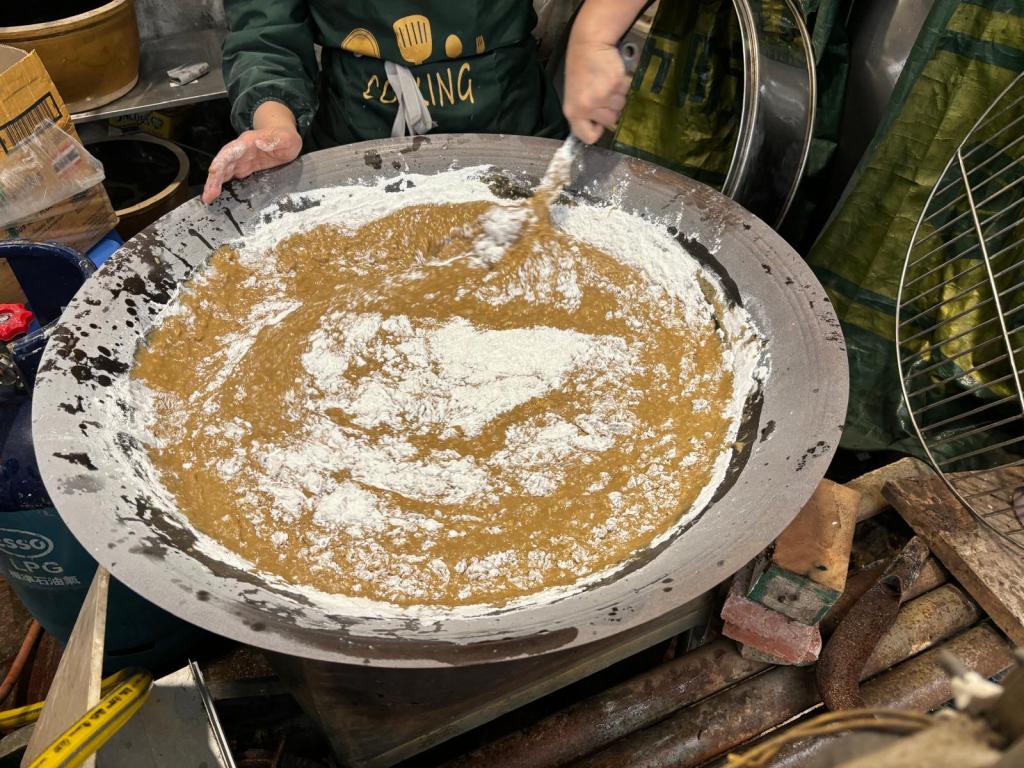
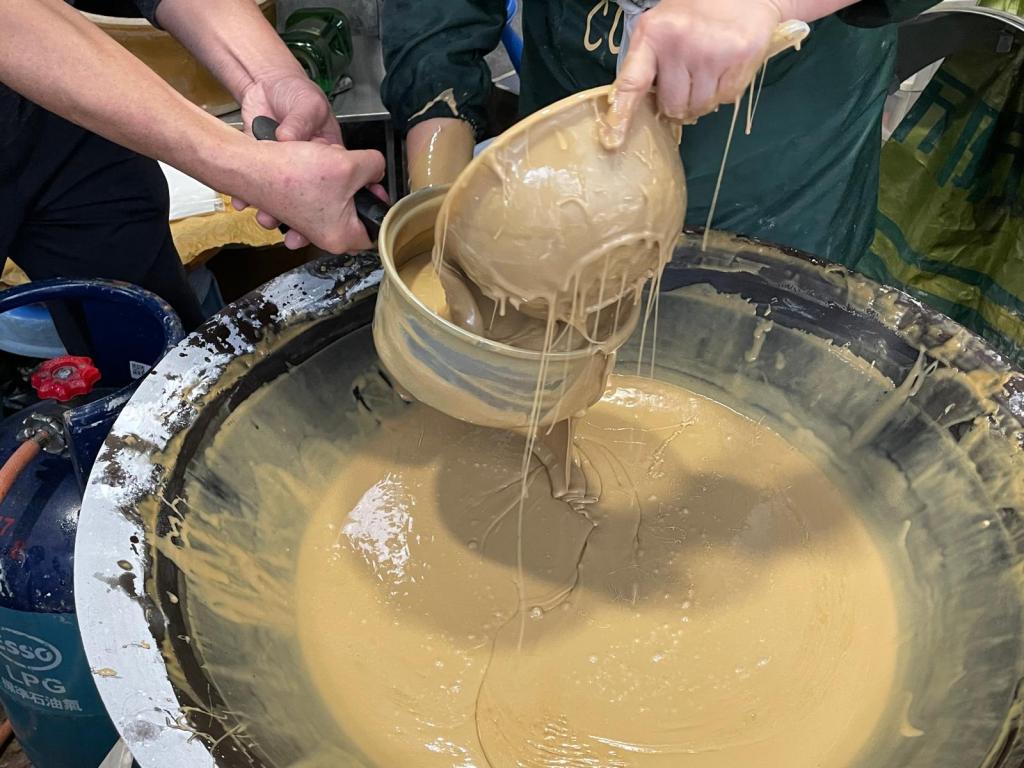
- 糯米粉與熱糖水逐步混合,邊加邊攪拌,揉搓至半凝固狀態。再加入食油,繼續揉搓至均勻。
- 竹籮需事先佈置以防滲漏︰內層鋪設竹片與厚雞皮紙,再用芒萁草骨枝或針線串連竹葉固定,一片片竹葉整齊地圍在周邊,底部鋪上牛油紙。然後放入蒸鍋。
- 將混合好的糯米漿倒入竹籮,至八分滿。
- 蒸煮圓籠茶粿需時約30小時,採用石油氣。前10小時以大火蒸煮,其後轉為溫火慢蒸,期間每隔4小時需補水一次。
- 圓籠茶粿(直徑約24吋)蒸好後需靜置冷卻一星期,待其自然變硬、定型,方可切塊與親友分享。在冷卻期間須特別留意保存環境, 避免圓籠茶粿受潮變質或發霉。
© 2026過客聊客家,版權所有。
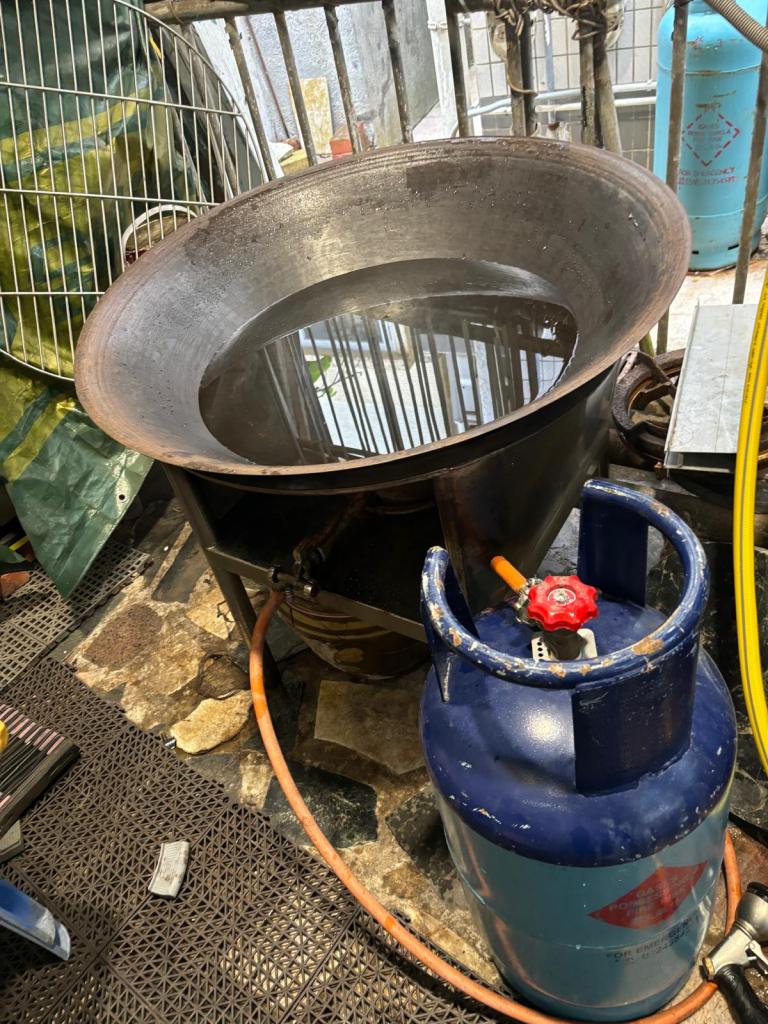
現以架設鑊灶代替柴火灶;以及石油氣代替柴草為燃料,蒸煮圓籠茶粿。
Nowadays, a wok stove is set up in place of the traditional firewood stove, and petroleum gas has replaced firewood as the fuel for steaming.
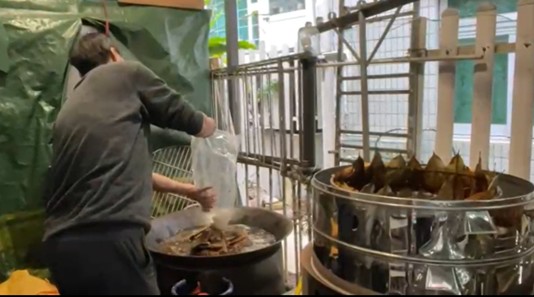
加入黑蔗糖,以溫火慢煮至溶化成糖水。
Simmer gently until fully dissolved, producing a brown sugar syrup.
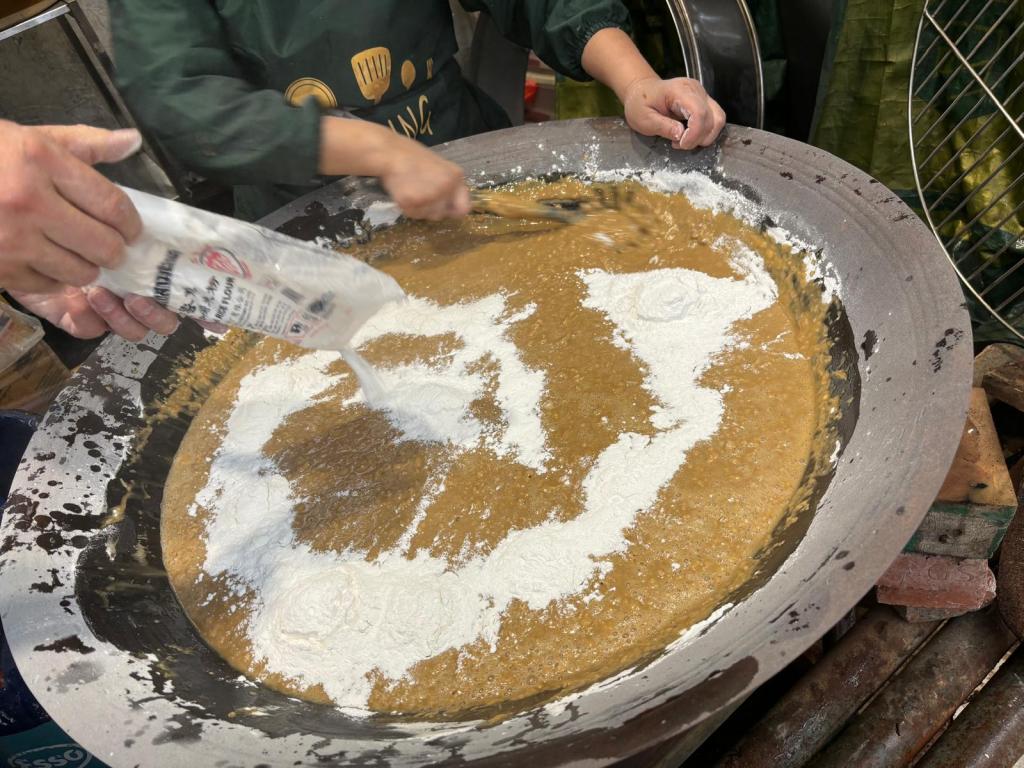
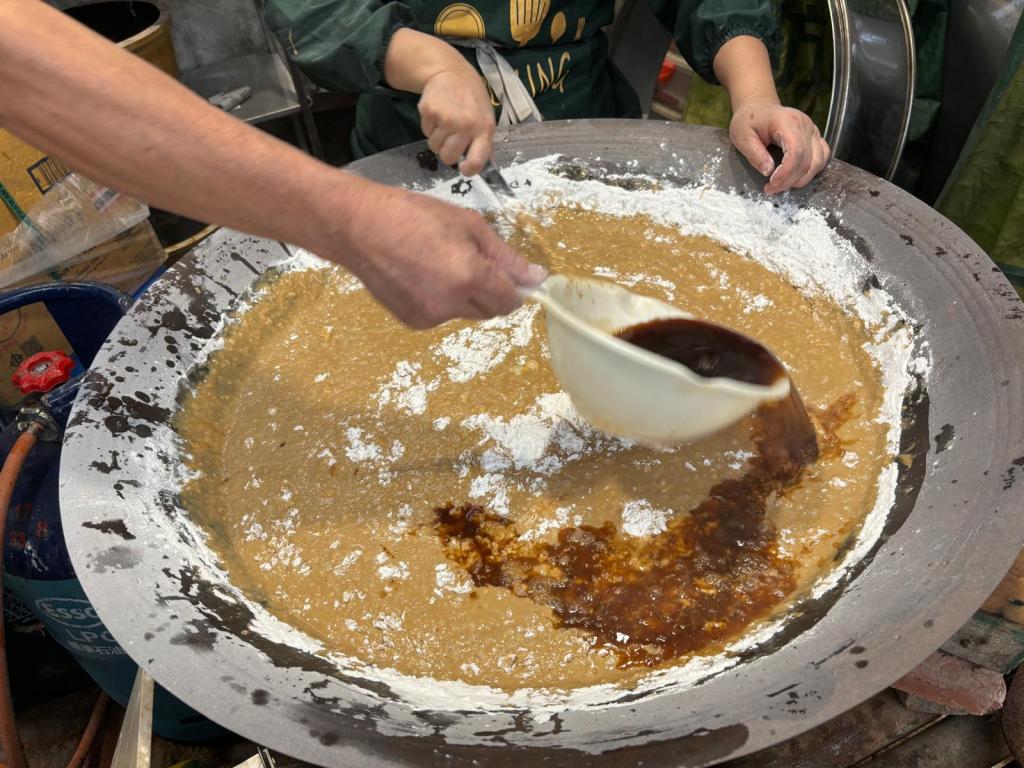
逐步混合糯米粉與糖水
Gradually mix glutinous flour and brown cane sugar water
搓揉糯米漿至半凝固狀態
Knead the mixture into semi-solid state
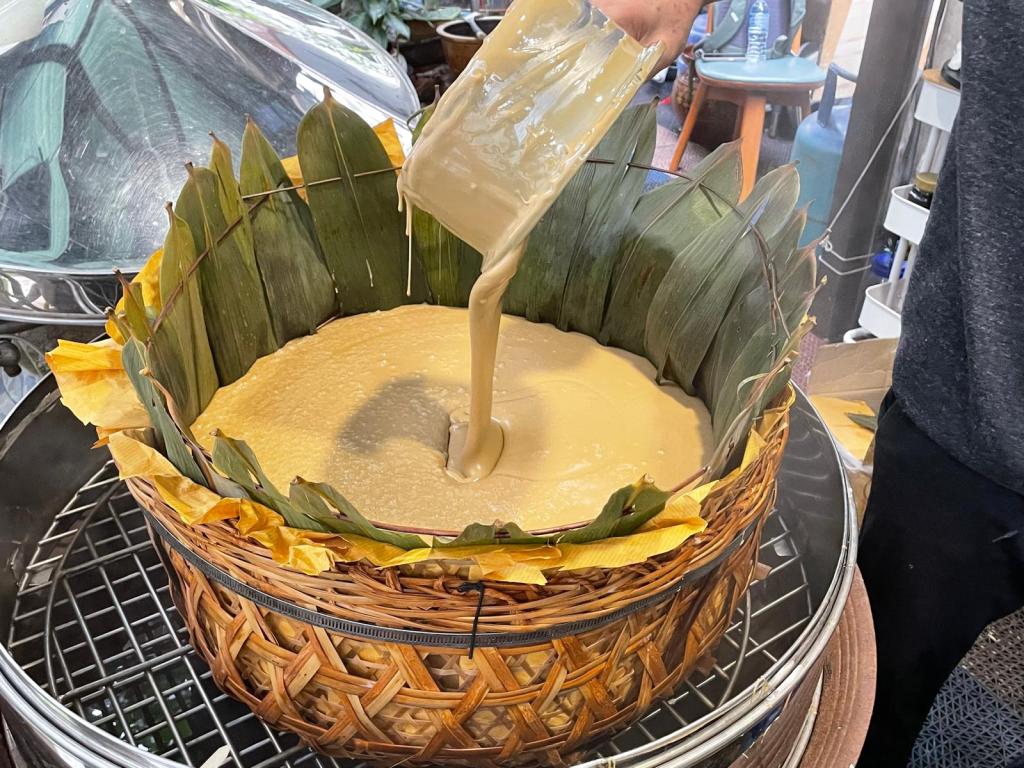
將混合好的糯米漿倒入竹籮
Pour the mixture into the bamboo basket
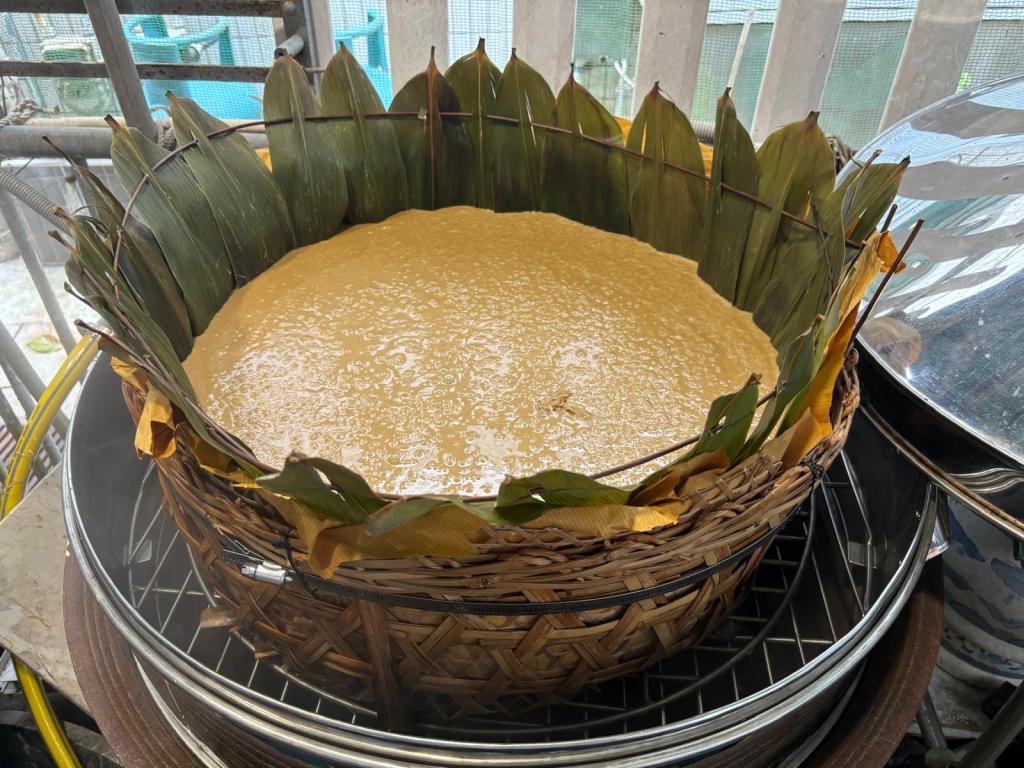
準備蒸製
Prepare for Steaming
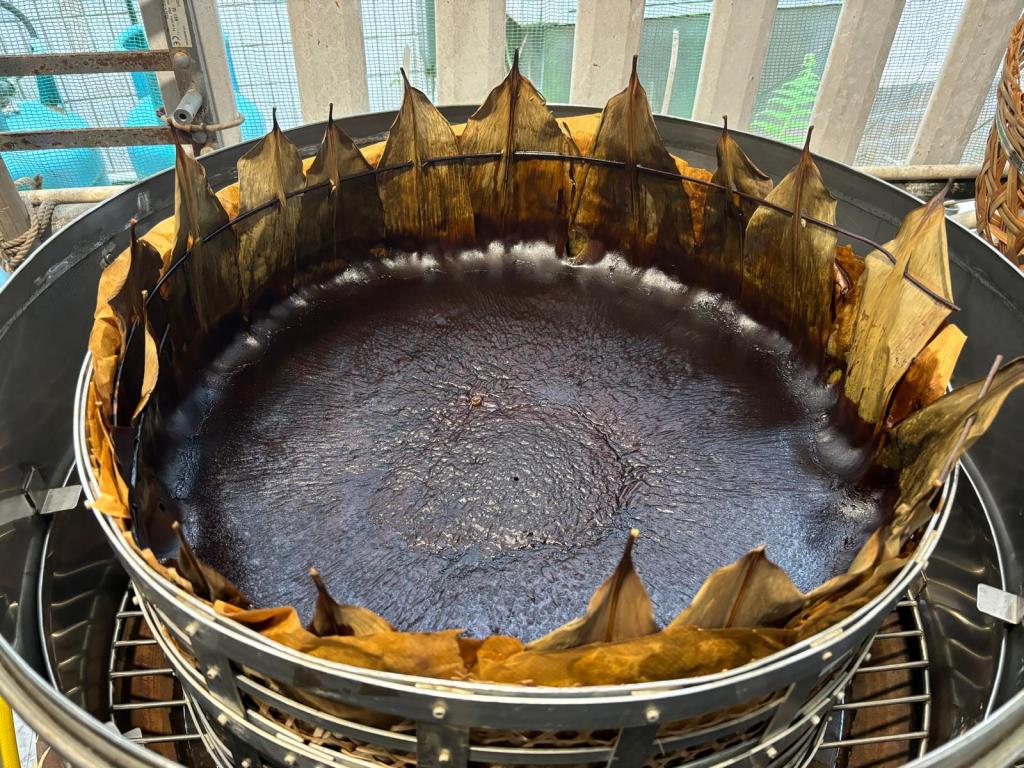
蒸製完成的圓籠茶粿
Finish
Rice Delicacies Rooted in Festive Tradition: Round Steamed Sticky Rice Dumpling
Sticky Rice Dumpling stands as a significant exemplar of Hakka rice-based cuisine, distinguished by refined interplay of rice, cane sugar and bamboo leaves. This combination determines both its perfection of tea-time treat and the key measure of its quality. The round steamed sticky rice dumpling is not merely the beginning of a taste experience – it also symbolizes the origin and continuity of Hakka culinary tradition.
Origin
Round steamed sticky rice dumpling is a traditional festive food of Hakka during the Lunar New Year. Presented in bamboo basket, its form resembles the miniature of Hakka Tulou, symbolizing collective memory and homesickness. For Hakka who left their ancestral homeland, this sticky rice dumpling became a vessel of longing for the Tulou of their homeland – a reminder to honor one’s roots. Made with pure cane sugar of rich fragrance, it adds sweetness to the festive season.
Through one great migration and five waves of displacement, sticky rice dumpling once served as vital sustenance on the journey, embodying the earth’s gift and the continuity of life. This not only carries historical memory but also expresses that future generations will cherish today’s stability with gratitude. It further represents the agrarian society’s thanks for harvests and prayers for favorable weather. As the fruit of hard labor, it is imbued with human warmth, symbolizing sharing and reunion.
Making Memories
• Traditionally, round steamed sticky rice dumpling were distinctly sweet, with glutinous flour and sugar mixed in equal proportions. In times of scarcity, sugar was a rare treat, enjoyed only during New Year or festive occasions.
• In the old days, sticky rice dumpling was steamed over firewood, using a traditional stove. Mastery of heat and water was essential, and the steaming process lasted a full day and night. Today, petroleum gas is used instead, offering more stable temperatures, though the steaming time is longer. Firewood steaming typically required 20 hours, still demanding careful control of moisture and firepower.
• In youth, the author assisted their parents in making round steamed sticky rice dumpling. From the 1990s onward, I began making on my own. At first, its size were relatively small, made with about two dou (traditional measure) of glutinous rice. By the 2010s, production gradually expanded, with the glutinous rice amount increasing to about three dou.
Making Technique
Ingredients:
- Brown cane sugar – 18 kg
- Glutinous Flour – 18 kg
- Water – 9 kg
Cooking Utensils
- Wok
- Steaming pot
- Petroleum gas
- Sieve
- Bamboo basket
- Bamboo leaves
- Bamboo strips
- Thick parchment paper
- Butter paper
- Fern stalks or needle and thread
Step
1. Boil water, then add 18 kg (approx.) of brown cane sugar. Simmer gently until fully dissolved, producing a brown sugar syrup.
2. Filter the syrup through a sieve to remove sand and other impurities.
3. Gradually mix glutinous flour with hot sugar syrup, stirring continuously. Knead until semi-solid, then add cooking oil and continue kneading until smooth and uniform.
4. Prepare the bamboo basket to prevent leakage: line the inner layer with bamboo strips and thick parchment paper. Secure bamboo leaves around the sides with fern stalks or needle and thread, and place butter paper at the bottom. Position the basket inside the steaming pot.
5. Pour the prepared mixture into the basket, filling it to about 80% capacity.
6. Steam the round steamed sticky rice dumpling for about 30 hours using petroleum gas. Begin with high heat for the first 10 hours, then switch to gentle heat. Replenish water every 4 hours during the process.
7. After steaming, the sticky rice dumpling (approx. 24 inches in diameter) must cool for one week to harden and set naturally before being cut into pieces and shared with family and friends. During cooling, pay close attention to storage conditions to prevent moisture, spoilage, or mold.
© 2026 Dialogues on Hakka. All rights reserved.

 hkhakkastory.com
Leave a comment