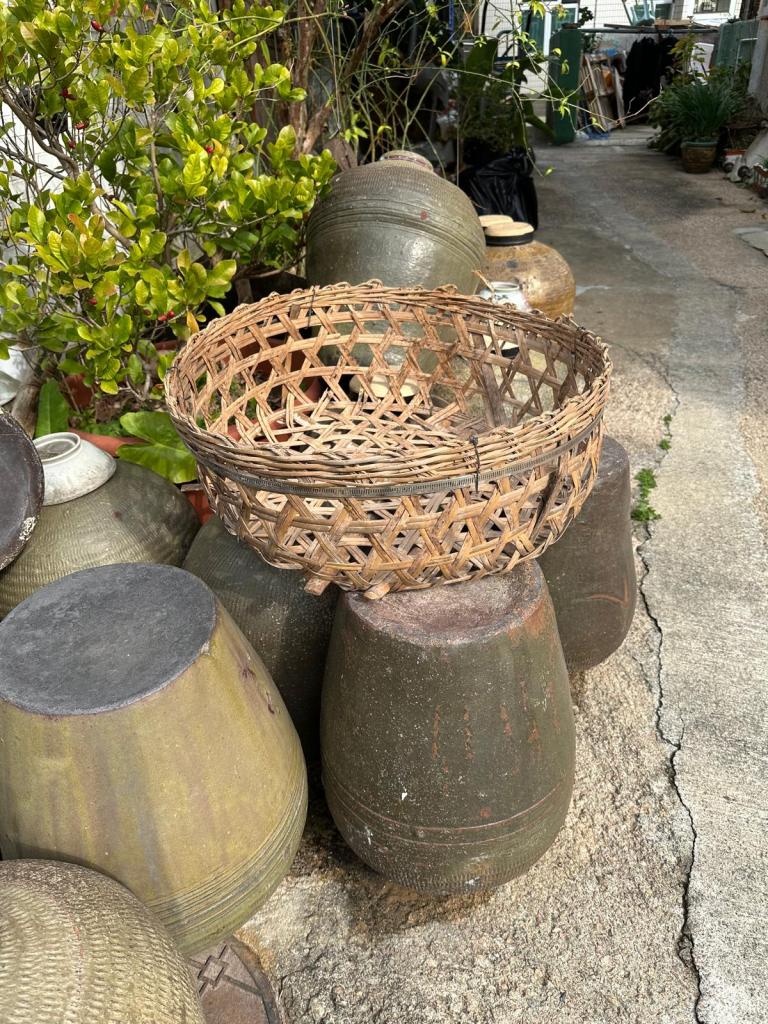
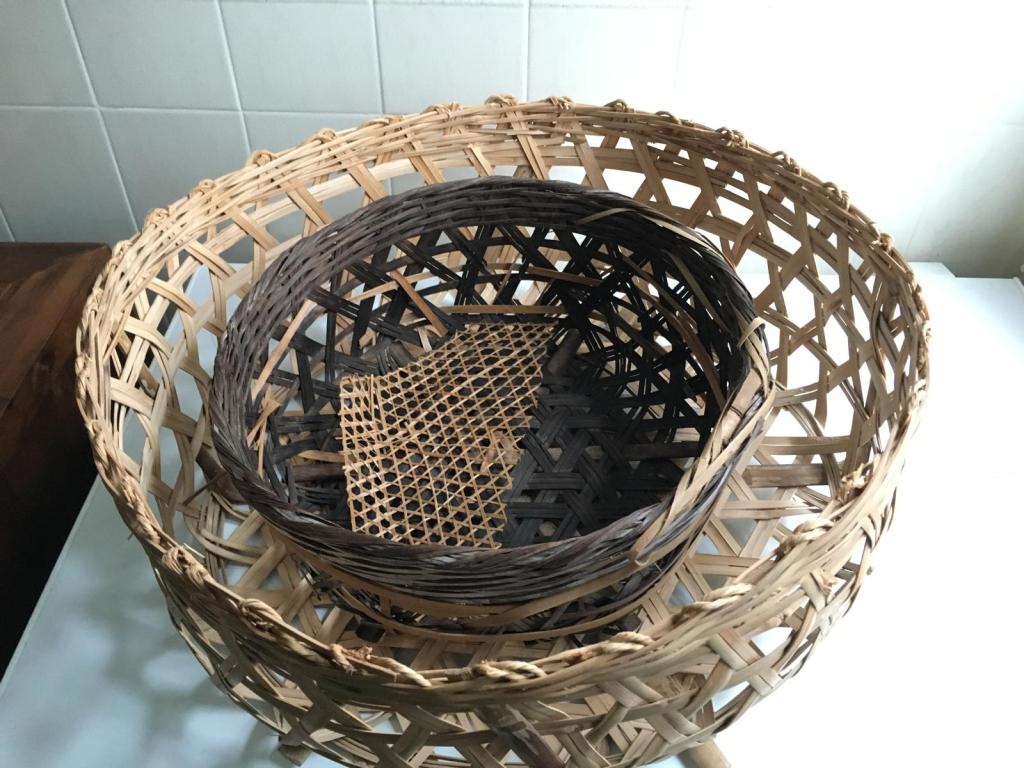
傳統的竹製日常器具,用以盛載蒸製的茶粿。
# 竹的知識
古時客家祖先的日常家具皆就地取材,以木、竹、藤為常見物料,其中尤以竹製器具最為普遍。
竹生長迅速,成材所需時日短暫,正如「十年樹木,百年樹人」之喻。
竹被視為君子之象徵,挺拔正直、風骨自持。古人有言:「寧可食無肉,不可居無竹」,又道「時窮節乃現」,以彰顯竹之高潔。至於今人所謂「窮時乃折現」,已不可同日而語。
竹枝堅韌,竹篾柔靭而富彈性,能收能放,既具包容之性,亦有高度可塑之質。
劇透來了~你能猜到這只蒸籮和下一篇帖文有什麼連結嗎?
© 2026過客聊客家,版權所有。
Treasure #01 Bamboo Steamer Basket
A traditional bamboo utensil used to steam sticky rice dumplings.
# Knowledge of Bamboo
In ancient times, the Hakka ancestors fashioned their everyday furniture from materials close at hand—wood, bamboo, and rattan being the most common, with bamboo utensils especially popular.
More than just practical, bamboo carries cultural meaning:
Bamboo grows swiftly and matures in a short span, echoing the saying: “It takes ten years nurture a tree, but a hundred years to train a man.”
Regarded as the emblem of the gentleman, bamboo stands tall and upright, steadfast in spirit. The ancients declared: “Better to have no meat to eat than to live without bamboo” and “True integrity reveals itself in times of hardship,” to extol its noble character. As for the modern phrase “hardship brings compromise,” it is of an entirely different tenor.
Its stalks are strong and resilient, while its strips are supple and elastic—able to yield and to endure. Bamboo embodies both inclusiveness and remarkable versatility.
A glimpse revealed… this humble steamer carries a thread that will unfold in our next story.
© 2026 Dialogues on Hakka. All rights reserved.

 hkhakkastory.com
Leave a comment